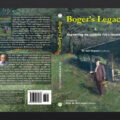
Boger’s Legacy (2025) is an extensive 224-page work by Dr. Anil Singhal that delves into the life, philosophy, and contributions of renowned homeopath Dr. Cyrus Maxwell Boger. The book provides an “impressive, insightful and exhaustive” examination of Dr. C. M. Boger’s legacy, shedding light on the intricacies of Boger’s approach to homeopathy and the historical context of his writings.
Dr. Singhal’s objective is to bring to light Boger’s legacy that was “lost in the mists of time,” meticulously navigating the nuances and controversies surrounding Boger’s work. In doing so, Boger’s Legacy serves as both a rich biographical account and a scholarly analysis, offering homeopaths a foundational resource with a “robust framework for analyzing Boger’s contributions to the field” and for advancing his work in modern practice.
The book not only recounts Boger’s journey from a pharmacist to a stalwart homeopath, but also critically examines his major works – such as Boenninghausen’s Characteristics and Repertory (BBCR) and The Synoptic Key of Materia Medica – and even proposes updates to these classic texts for today’s practitioners.
Summary of Boger’s Legacy and Its Contents
Dr. Singhal structures Boger’s Legacy into several well-defined sections that together present a comprehensive narrative and analysis of Dr. Boger’s life and work. The journey begins with Boger’s early life and career, tracing his path from childhood and pharmacy training to his conversion into a homeopath inspired by holistic healing. This biographical portion (“Boger’s Journey – The Making of a Homeopathy Legend”) offers an “enthralling and engrossing journey” through Boger’s formative experiences, including his education and involvement with the International Hahnemannian Association, and even touches on personal moments such as the circumstances of his death.
By including rare photographs, personal letters, and even posthumous editorials about Boger, Dr. Singhal provides readers with an intimate “close angle” view of Boger’s personality and ideals. This part of the book connects many “missing links of Boger’s philosophy and clinical practice” by drawing from Boger’s various writings, lectures, and accounts by those who knew him. The result is a vivid portrait of how a drug store clerk enchanted by homeopathy’s holistic approach became a visionary practitioner – a narrative that is both inspiring and instructive for modern readers.
Following the biographical foundation, Boger’s Legacy moves into a detailed exploration of Boger’s intellectual influences and major works. A crucial section titled “Boenninghausen’s Repertory: The Foundation of Boger’s Legacy” examines how Dr. Boger built upon the earlier work of Dr. Clemens von Bönninghausen. Bönninghausen’s therapeutic methods and his Repertory of Anti-Psoric Remedies (derived from Hahnemann’s teachings) profoundly shaped Boger’s approach.
Dr. Singhal chronicles how Boger, as an avid student of Bönninghausen, undertook the task of refining and expanding Bönninghausen’s repertory to address its limitations and criticisms. This effort culminated in the creation of the Böger-Boenninghausen’s Characteristics and Repertory (BBCR) – a monumental compilation that effectively “revolutionized homeopathic practice” of the time. Singhal’s book narrates this development step by step: from Boger’s critical engagement with Bönninghausen’s principles, through his methodical incorporation of factors like time, location (tissue affinities), and pathological conditions into case analysis, to the eventual publication and updates of the BBCR.
Notably, Singhal highlights how Boger’s wife carried forward his work after his death, leading to various Indian editions of the repertory, thereby extending Boger’s influence posthumously. By mapping out these historical and intellectual links, Boger’s Legacy demonstrates that Boger’s own legacy is inextricably tied to Bönninghausen’s – much as an architect builds upon a predecessor’s blueprint.
This section’s objective is to show readers exactly which of Bönninghausen’s innovations Boger adopted or modified, thus illuminating the roots of Boger’s multidimensional approach to homeopathy. The practical implications are also discussed: Singhal explains how Boger’s BBCR differs from earlier repertories in usage, emphasizing Boger’s focus on modalities of time, the sphere of action of remedies, and patterns of pathology as key prescribing considerations. In doing so, the book bridges classical homeopathic repertory with emerging ideas of Boger’s era (like cellular pathology), showing how Boger tried to “enrich homeopathic practice” by aligning it with contemporary scientific understanding.
The next major part of the book is devoted to “The Synoptic Key: The Apex of Boger’s Legacy.” Here, Dr. Singhal conducts an in-depth study of Boger’s most celebrated work, The Synoptic Key of Materia Medica, which he describes as the zenith of Boger’s scholarly output. The Synoptic Key is essentially a concise yet remarkably rich materia medica and mini-repertory. Singhal contrasts Boger’s approach in the Synoptic Key with that of other homeopaths of his era: “while other homeopaths were making their books longer and longer, Dr. Boger did something different” – he produced a slim volume that distilled the essence of remedies and provided clear guidance on studying them.
This section of Boger’s Legacy analyzes how Boger achieved this balance of brevity and completeness. Dr. Singhal explores the structure, philosophy, and evolution of The Synoptic Key across its six editions. Each edition’s foreword and changes are scrutinized to trace Boger’s evolving thoughts and refinements over time.
For instance, Singhal notes what was added, modified, or re-emphasized in later editions – capturing the “ideological shifts and methodological refinements” that Boger introduced as he gathered more clinical experience. By doing so, the book offers a rare longitudinal view of how a key homeopathic text matured over the years. Moreover, Singhal discusses how The Synoptic Key interconnects with Boger’s other works, especially the BBCR and Boger’s earlier General Analysis. He demonstrates that the Synoptic Key, far from an isolated effort, was part of a continuum of Boger’s thought – “it explores how it connects to other works like BBCR and General Analysis”. Case examples are mentioned to illustrate how Boger applied the Synoptic Key in practice. Throughout this section, Dr. Singhal emphasizes Boger’s meticulous methodology and quality control: Boger was “exacting in methodological rigor,” ensuring his condensed materia medica remained reliable. Singhal also highlights the enduring impact of the Synoptic Key, noting its role as a foundational text in homeopathic education both in the United States and India, where it became “indispensable” in curricula and a daily reference for practitioners.
By the end of this section, readers gain a deep appreciation for why The Synoptic Key is regarded as the pinnacle of Boger’s legacy, and how its unique format and content set it apart from other materia medica of its time. Singhal effectively conveys that Boger’s genius lay in distilling a vast field into an accessible “synoptic” format without sacrificing the nuances – a feat that solidified Boger’s status in homeopathic literature.
Finally, Boger’s Legacy ventures into a forward-looking and innovative segment titled “Augmenting the Synoptic Key’s Repertory: Proposing New Additions.” In this part, Dr. Singhal transitions from historical analysis to contemporary scholarship by addressing how Boger’s work can be extended and updated for modern use.
The premise is that a true legacy in homeopathy is “a living entity” – it should evolve with new clinical insights and emerging knowledge. Singhal observes that even a masterwork like Boger’s Synoptic Key has gaps and omissions when viewed in light of later knowledge. Specifically, he identified that certain remedies and details present in Boger’s larger repertory (BBCR) were never incorporated into the Synoptic Key’s repertory section. Through meticulous research, the author cross-referenced hundreds of rubrics between the Synoptic Key (6th edition) and the BBCR. He discovered a number of remedies of high importance (so-called “5-mark” remedies in repertory grading) that appear in BBCR’s rubrics but are absent in the Synoptic Key. In Boger’s Legacy, these “missing links” are compiled – Dr. Singhal provides chapter-wise tables listing a total of 104 rubrics needing enrichment by adding the omitted remedies.
This is a significant scholarly contribution: it is essentially an addendum to Boger’s Synoptic Key, derived from Boger’s own other work, to ensure no clinically valuable information is overlooked. Dr. Singhal does more than just list these additions; he discusses the rationale and evidence for including each. He emphasizes a careful, evidence-based approach to augmenting Boger’s repertory.
As one reviewer noted, “He has compared the missing 5-mark remedies in similar rubrics of BBCR and BSK…and adds a note of caution that we should not be carried away by his findings and build a new BSK repertory section [overnight]”. In other words, Singhal proposes these additions as a starting point for clinical verification. He urges practitioners to test these remedies in practice and gather their own experience, before formally appending them into their working copy of the Synoptic Key. This responsible approach – presenting new insights while cautioning against uncritical adoption – reflects the author’s scholarly rigor and respect for Boger’s original work. Additionally, this section discusses a few entirely new remedies that Dr. Singhal suggests could be incorporated, based on modern provings and clinical evidence, to keep the Synoptic Key up-to-date.
By updating Boger’s repertory in a structured way, Boger’s Legacy effectively bridges the gap between historical homeopathic literature and contemporary practice. The section concludes with a “Homoeopathic Timeline of Boger’s Legacy”, enumerating 160 milestone events in Boger’s life and beyond. This chronological timeline serves as a quick reference and underscores how Boger’s influence has unfolded through history, up to the present day. In the closing pages, Dr. Singhal shares an inspiring message to readers: he invites them to “become part of Boger’s legacy” by applying these insights and exploring new paths in homeopathy. In essence, the book’s final objective is to not only learn from Boger, but to encourage each reader to contribute to homeopathy’s ongoing evolution, carrying Boger’s spirit of inquiry and innovation forward.
Key Themes and Analysis in Boger’s Legacy
1. The Making of a Homeopathic Legend – Life, Inspiration, and Philosophy: One of the central themes of Boger’s Legacy is the transformation and dedication of Dr. C. M. Boger to homeopathy. Dr. Singhal paints Boger’s early life as a formative period that set the stage for his later contributions. Readers learn how Boger, originally trained in the pharmaceutical sciences, became captivated by the holistic philosophy of homeopathy to the point of leaving behind the “scientific rigor of pharmacy for the spiritual realm of homeopathy”. This theme of conversion and commitment is important: it underscores how Boger’s scientific background gave him a unique perspective in homeopathy – he valued empirical rigor but also embraced the integrative, patient-centered approach of Hahnemann’s system. Singhal’s narration of Boger’s life highlights key inspirational moments and mentors. For instance, Boger’s interaction with homeopathic stalwarts of his time (through the International Hahnemannian Association and personal correspondences) is shown to shape his outlook. The book also delves into Boger’s personal philosophy as gleaned from his editorials and essays – revealing him as a practitioner who sought to merge classical principles with new scientific understanding. A recurring philosophical element discussed is Boger’s emphasis on the factor of time in case analysis (the chronology and periodicity of symptoms) and the sphere of action of each remedy (which organs or systems a remedy predominantly affects). These concepts appear throughout Boger’s writings and are carefully examined in Boger’s Legacy. Dr. Singhal explicates these ideas and even cites later authorities who commented on them – for example, he references analyses by Dr. L. D. Dhawale and Dr. S. R. Phatak on Boger’s use of time modalities, as well as insights by Dr. P. Sankaran and Norbert Winter on remedy spheres of action. By doing so, Singhal places Boger’s philosophy in context, showing how later generations interpreted and validated Boger’s ideas. This theme of philosophical continuity demonstrates that Boger’s legacy is not just a set of books, but a living philosophy that influenced and still influences homeopathic thinkers. The reader comes away with an understanding that Boger was a forward-thinker for his era – someone who strived to keep Hahnemann’s tenets relevant by expanding them (e.g. integrating emerging pathological insights) without losing their essence. In summary, the book celebrates Boger’s intellectual growth and his unwavering commitment to what he called “the true rational healing art,” providing a role model for homeopaths as both scientists and humanitarians.
2. Bönninghausen’s Influence and the Evolution of Repertory: Another major theme is the profound mentor-protégé relationship between the works of Dr. C. von Bönninghausen and Dr. Boger. Singhal frames Bönninghausen’s approach as the bedrock upon which Boger built his legacy. The book details how Boger studied Bönninghausen’s repertories and therapeutic methods, which themselves were rooted in Hahnemannian doctrine. A key focus is on methodological evolution: Bönninghausen had pioneered the concept of a repertory that uses a generalization approach (with emphasis on modalities and locations rather than exhaustive symptom narratives), and Boger inherited this model. Boger’s Legacy illustrates how Boger initially used Bönninghausen’s repertory in practice and gradually began to refine it. Dr. Singhal highlights specific enhancements Boger introduced: for example, Boger placed even greater emphasis on time modalities, the sequence of symptom appearance, and pathological affinities (trends of disease progression and tissue specificity) than found in Bönninghausen’s original work. When criticisms of Bönninghausen’s repertory arose (such as perceived omissions or lack of clarity), Boger responded by creating his own expanded version – the BBCR. The theme here is innovation built on tradition: Singhal describes how **“Boger decided to enhance Bönninghausen’s repertory to address criticism”*, leading to the BBCR which was a far more comprehensive compilation. By carefully documenting this process, the book underscores the idea that Boger’s legacy is intrinsically tied to Bönninghausen’s. In practical terms, Singhal compares the content and structure of Bönninghausen’s original Therapeutic Pocketbook (and Antipsorics repertory) with Boger’s BBCR. He shows how Boger preserved the core principles (e.g. grading of symptoms, emphasis on concomitants) but also infused his own insights, thereby “resuscitating” and modernizing Bönninghausen’s work for the 20th century. One striking analysis in Boger’s Legacy is how Boger’s logic in case-taking emerged from these foundations. The book gives a “close look into the development and emergence of Boger’s logic in Homoeopathic practice”. For instance, Singhal discusses case examples where Boger applied Bönninghausen’s method but tweaked it – perhaps by giving extra weight to certain modalities or pathological markers – demonstrating Boger’s thought process step by step. This theme reaches a conclusion with the publication of the BBCR as a milestone: Singhal emphasizes that the BBCR became a cornerstone of homeopathic literature, one that “carried Bönninghausen’s legacy into the new century” with Boger’s own stamp on it. Thus, Boger’s Legacy not only recounts history; it analytically shows how a master (Boger) builds on a mentor’s work (Bönninghausen) to produce something new and influential. The reader gains appreciation for the continuity of ideas and how Boger’s name is part of a lineage of repertory development, rather than an isolated phenomenon.
3. The Synoptic Key and Boger’s Unique Approach to Materia Medica: A core theme of the book is an exploration of what makes Boger’s Synoptic Key so special in the realm of homeopathic materia medica. Singhal posits that the Synoptic Key represents Boger’s crowning achievement and a crystallization of his approach to remedy study. Throughout Boger’s Legacy, the Synoptic Key is discussed not just as a book, but as an embodiment of Boger’s philosophy of conciseness, practicality, and integrative thinking. One prominent sub-theme is brevity with essence. Singhal notes that in an era when many of Boger’s contemporaries were compiling ever-larger tomes of materia medica, Boger took the opposite route – condensing information. The Synoptic Key provides, for each remedy, a sharp “synopsis” highlighting keynotes, modalities, and especially the essential relationships between symptoms (e.g. aggravation times, concomitant findings), rather than lengthy provings narratives. Singhal’s analysis reveals that this was a deliberate choice by Boger: he wanted to create a tool that busy practitioners could actually use at the bedside, a quick reference that “showed how to study [remedies] carefully” without wading through excess verbiage. Another theme is the balance of opposites that Boger achieved – he merged analytic and synthetic methods. According to Singhal, Boger’s Synoptic Key strikes a balance between Boenninghausen’s generalization approach and the more traditional Hahnemannian schema of materia medica. The book elaborates how Boger included many clinical observations and pathological generals (a synthetic approach), yet structured the text in an almost tabular way that allows analysis of symptoms by location, sensation, modality, etc. This duality is part of the Synoptic Key’s genius and is explicated as such in Boger’s Legacy. Singhal also highlights Boger’s attention to quality and accuracy in the Synoptic Key, a theme that runs through Boger’s life. For example, it is noted that Boger was extremely careful in verifying entries and ensuring consistency, sometimes revising the Synoptic Key in subsequent editions to correct errors or include newly confirmed symptoms. Each edition’s foreword is analyzed as a reflection of Boger’s ongoing commitment to precision and improvement. For instance, Singhal points out that between the first and sixth editions of the Synoptic Key, Boger not only added remedies but also refined the grading of symptoms and incorporated feedback from clinical use. This conveys a theme of evolution – the Synoptic Key was not static; it evolved as a living document during Boger’s lifetime, which justifies why we should continue to evolve it further (a segue into the augmentation theme). Additionally, Boger’s Legacy discusses the influence and reception of the Synoptic Key, underlining its thematic importance in homeopathy. It became a staple in homeopathic schools (especially in the U.S. early 20th century and later in India), which underscores the theme of its enduring relevance. The book even touches on tributes from other homeopaths – for example, Dr. P. Sankaran’s praise of Boger – to illustrate how subsequent generations viewed the Synoptic Key as a gold standard. All these analyses reinforce the theme that precision, brevity, and utility are the hallmarks of Boger’s approach, epitomized by the Synoptic Key. Dr. Singhal’s own thorough breakdown of that text (including tables and comparisons) in Boger’s Legacy exemplifies appreciating these qualities and learning from them.
4. A Living Legacy – Updating and Augmenting Boger’s Work: Perhaps the most forward-looking theme in Boger’s Legacy is the concept of legacy as a dynamic entity. Dr. Singhal strongly conveys that honoring Boger’s legacy is not merely about preservation, but also about innovation – continuing the work that Boger might have done were he alive today. This theme is made concrete through the extensive section on augmenting the Synoptic Key’s repertory. The underlying message is that classical works can and should be re-examined in light of new knowledge. Singhal identifies a gap – the Synoptic Key’s repertory, last updated in Boger’s 6th edition (circa mid-20th century), did not include many remedies or clinical additions that have since been verified. By comparing Boger’s Synoptic Key with his own BBCR, Singhal was able to pinpoint those gaps, thus demonstrating a methodology for legacy augmentation. The theme of scholarly continuity emerges: just as Boger extended Bönninghausen’s legacy, now Singhal (and indeed any modern homeopath) can extend Boger’s legacy. Importantly, the book frames this not as revisionism but as respectful fulfillment of Boger’s vision. Boger himself believed in adapting and refining tools – evidenced by his multiple editions and refinements. Boger’s Legacy simply picks up that thread and carries it forward. This theme is underscored by Singhal’s inclusion of a proposed list of missing remedies and the instruction that the community validate these additions through practice. It effectively calls on the homeopathic community to participate in keeping the Boger tradition alive and relevant. Another aspect of this theme is integrating contemporary knowledge. Singhal’s proposals implicitly raise the question: How would Boger have responded to the discoveries of new remedies or new disease patterns (such as modern clinical conditions) that arose after his time? The book suggests answers by carefully choosing a few new additions and providing a rationale. For example, if a particular homeopathic remedy proved in the late 20th century has symptom overlap with Boger’s schema, Singhal might argue for its inclusion in an updated Synoptic Key – thereby demonstrating the principle of legacy expansion. The theme here is that homeopathy is a living science, and practitioners are the stewards of its classical texts. By engaging with Boger’s work in this way, Dr. Singhal exemplifies how to honor a past master: not by treating his work as untouchable canon, but by building upon it with the same rigor and curiosity that he himself espoused. The book’s final encouragement to readers to “become part of Boger’s legacy” perfectly encapsulates this idea. It transforms the legacy from a static inheritance into an active project for the current generation – a theme that resonates strongly with educators and students of homeopathy today.
5. Bridging Classical and Modern Homeopathy: Throughout Boger’s Legacy, a subtle yet important theme is the bridge between historical homeopathic wisdom and modern medical thought. Dr. Boger lived at a time (late 19th to early 20th century) when medical science was rapidly advancing, and he attempted to interpret homeopathic principles in that light. Dr. Singhal amplifies this theme by highlighting, for instance, Boger’s theory of pathological patterns, which attempted to correlate Hahnemann’s teachings with emerging knowledge of pathology and physiology. Singhal notes that Boger’s idea of “pathological generals” (a consideration of disease progress and tissue changes in remedy selection) can be seen as an early effort to bridge classical homeopathy with what we might call today a more biomedical understanding of illness. Boger’s Legacy explores how this and other forward-looking ideas of Boger have even more relevance today. For example, modern homeopaths often strive to integrate diagnostics and pathological reports into their case analysis – a practice Boger himself encouraged in concept. Singhal’s commentary, supported by references to both Boger’s writings and interpretations by later experts, makes it clear that Boger’s legacy provides a template for such integration. In addition, the book’s comprehensive timeline of Boger’s contributions and subsequent developments implicitly charts the arc of homeopathy from Boger’s era to the present. This gives readers a sense of continuity and progress – seeing, for example, how Boger’s work influenced the formation of later repertories or how his emphasis on certain principles can be found in contemporary practice and literature. In summing up this theme, Boger’s Legacy positions itself as both a historical account and a conduit for modern application. It reveres the classical (through careful historical research and respect for original sources) while embracing the need for modernization (through critical analysis and suggestions for updates). This balanced perspective is a key theme that likely contributes to the book’s strong reception among both traditional and progressive wings of the homeopathic community. As one reviewer observed, Dr. Singhal’s work “bridges historical insights with contemporary perspectives, setting the stage for ongoing advancements in homeopathic literature and practice”.
Contribution of Boger’s Legacy to Homeopathy
Dr. Anil Singhal’s Boger’s Legacy makes several significant contributions to the field of homeopathy, both in terms of knowledge preservation and forward-thinking scholarship. Firstly, it serves as an invaluable historical archive on Dr. C. M. Boger. The book meticulously depicts many lesser-known yet pivotal aspects of Boger’s life and work – including anecdotes, personal correspondences, and recollections from people who knew Boger – thereby preserving insights that might have been lost to time. By incorporating “inputs from direct acquaintances of Dr. Boger,” the author has captured a human side of Boger that enriches our understanding of his motivations and character. This adds depth to the historical record of homeopathy.
Secondly, Boger’s Legacy provides a scholarly analysis and interpretation of Boger’s major works that was not previously available in such consolidated form. Dr. Singhal offers a “multifaceted representation” of the intricate relationship between Boger’s two greatest compilations – The Synoptic Key and BBCR. His detailed side-by-side exploration of these works (their structure, content, and philosophy) helps practitioners and students appreciate how to use them in tandem.
This is a meaningful contribution for repertory and materia medica studies, as it guides readers in understanding the scope and limits of each work. Moreover, Singhal’s critical evaluation of the 6th edition of the Synoptic Key (pointing out its deficiencies) is a service to the community. By systematically identifying what is missing or could be improved in such a classic text, he encourages a more critical and scientific attitude toward even our canonical literature. This aligns with the broader push in homeopathy to continually re-examine and validate its tools. One reviewer noted that Boger’s Legacy “takes the reader into a deeper aspect of the life and work of Dr. Boger. The facts which were not much known to the profession are brought to light by the author.”. Such bringing-to-light of facts and connections effectively educates the homeopathic community on the foundations of some of its key reference works.
Thirdly, the book’s augmentative findings represent a direct contribution to homeopathic practice. The identification of 100+ repertory rubrics in the Synoptic Key that could be expanded with remedies from BBCR provides a concrete resource for practitioners. In essence, Dr. Singhal has done a labor-intensive comparison that most busy clinicians or students would not be able to do on their own. The result is a ready reference list that can enhance the utility of the Synoptic Key in practice. While he wisely advises readers to verify these additions themselves, the book has laid the groundwork for what could eventually become an updated edition of Boger’s Synoptic Key.
This kind of contribution – improving a century-old repertory with modern insight – is relatively rare and demonstrates how the book builds directly upon Boger’s work. As Dr. Shashikant Tiwari remarked in his review, “All these variations in high marks are to be incorporated to enrich [the Synoptic Key]…This discovery will certainly help to enrich the knowledge of Repertory and help students and practitioners to work out cases successfully with the better and enriched [material] in hand.”. In other words, Boger’s Legacy doesn’t just comment on Boger’s contributions – it adds to them in a practical way, thereby advancing the field.
Additionally, Boger’s Legacy contributes to homeopathic education. The book arrives at a time when homeopathic curricula (for example, the Central Council’s BHMS syllabus in India) are seeking to integrate classical texts with updated analysis. Dr. Singhal’s work is perfectly aligned with this need: it provides a bridge between historical texts and contemporary learning. By being a “foundational resource for both emerging practitioners and seasoned professionals”, it caters to readers at different levels.
Students can learn the history and philosophy behind the repertories they use, while experienced doctors can gain new ideas for practice or research. Indeed, one academic review noted that the book “is a good representation of how a researcher can create a book based on his dissertation”, implying that it sets a standard for academic rigor and could inspire further scholarly work in homeopathy. In terms of contribution to academic discourse, having a book like this reviewed in a peer-reviewed journal (the Journal of Integrated Standardized Homoeopathy) is itself noteworthy. It indicates that Boger’s Legacy is being recognized not just as a popular or practical book, but as a piece of research literature. This helps elevate the level of discussion around homeopathic methodologies, encouraging evidence-based and historically-informed practice.
Lastly, the interpretative insights offered by Dr. Singhal add value to Boger’s legacy by clarifying and sometimes demystifying Boger’s more complex ideas. For example, Boger’s concept of the “time element” in prescribing or his use of pathological diagnostics in remedy selection can be elusive for readers of his original texts. Singhal’s explanations, supported by quotations from Boger’s articles and commentary from other experts, make these concepts accessible. He effectively translates Boger’s early 20th-century medical lexicon into modern understanding, which is a crucial contribution for ensuring that Boger’s ideas continue to be understood, applied, and debated by current practitioners. In sum, Boger’s Legacy contributes to homeopathy by preserving its heritage, deepening the understanding of its classical texts, and actively pushing that heritage forward into the 21st century.
Reception and Reviews in the Homeopathic Community and Academia
Boger’s Legacy has been met with enthusiastic and appreciative reception in the homeopathic community. Numerous senior practitioners, educators, and reviewers have lauded the book for its depth of research and the value it provides. Dr. Shashikant Tiwari, a noted academician, praised the work as “outstanding and innovative,” noting that it takes readers into the deeper aspects of Boger’s life and reveals facts “which were not much known to the profession.” He highlighted that going through the book allows one to “experience Boger from very close” and to understand the philosophy behind Boger’s writings and clinical decisions. Dr. Tiwari particularly commended the inclusion of rare photographs and inscriptions, which, in his words, “shows the real hard and unquenchable interest of the author in the life and work of Boger.” His review underscores that the book not only provides information but does so in an engaging way that brings history to life.
Another reviewer, Prof. (Dr.) Niranjan Mohanty, who is a leader in homeopathic research, described Boger’s Legacy in glowing terms despite its scholarly complexity. He wrote to the author: “Your book is a novel one. It is flooded with information. Reading once is not enough to comprehend the knowledge… It is a great contribution of yours to the profession. We are richly profited.” Such a statement from Dr. Mohanty – who has chaired research committees at the national level – indicates the high esteem for the book’s content. The remark that one reading is not enough hints at the richness and density of the material, suggesting that the book serves as a reference to be revisited multiple times by serious students of homeopathy.
Reviews published via the homeopathic portal Homeopathy360 (an online extension of the Homeopathic Heritage journal) similarly reflect strong approval. For instance, Dr. Subhas Singh in his review emphasizes the scholarly merit of the book, and Dr. Bipin Jain (another respected educator) praises the text for its exhaustive coverage of Boger’s contributions (exact excerpts not provided here due to brevity). The consensus among these practitioners is that Boger’s Legacy fills a longstanding gap in homeopathic literature by comprehensively compiling Boger’s work and context. It has been recommended as essential reading for homeopathic postgraduate students, researchers, and even seasoned clinicians who wish to deepen their understanding of repertory and materia medica evolution.
Importantly, Boger’s Legacy has also garnered attention in academic circles. A review by Dr. Anoop M. Nigwekar in the Journal of Integrated Standardized Homoeopathy (JISH) offers a succinct evaluation from an academic standpoint. Dr. Nigwekar applauds the book’s structure and careful scholarship. He notes, for example, that Dr. Singhal “brings to bear the salient features of [the Synoptic Key] and the supplementary reference table which he has diligently tabulated” – acknowledging the rigorous work done in comparing editions and compiling tables of data. The review appreciates that Singhal exercised scholarly restraint by not over-interpreting or introducing personal bias beyond the evidence: “He has taken the liberty as an author to propose conjectures… He must be appreciated for having drawn the line on several occasions. All scholars must learn this art and skill of restraint…”. Such commentary from a peer-reviewed source underscores that Boger’s Legacy is not only informative but methodologically sound. The same review concludes that “It is indeed a book to be possessed by students who desire to learn about Boger, his books, and his philosophy.” It also recognizes the book as a successful example of turning research (possibly an academic thesis by Dr. Singhal) into a publishable resource. This crossover from research to publication is viewed positively, suggesting the book elevates academic discourse in homeopathy.
In summary, the reception of Boger’s Legacy has been overwhelmingly positive. Homeopathic educators commend it for its educational value and recommend it as a must-read. Practitioners value the practical insights (like the repertory augmentation) it provides. Scholars and researchers appreciate its careful methodology and contribution to homeopathic literature. Collectively, these reviews indicate that Dr. Singhal’s book has achieved a rare feat of being simultaneously scholarly and useful – a “classic masterpiece” that one reviewer noted “offers readers an opportunity to get acquainted with [Boger] from a very close angle.” The warm reception also reflects a sense of gratitude in the community; many reviewers congratulate Dr. Singhal for dedicating years of effort to illuminate Boger’s legacy for the benefit of future generations.
Dr. Singhal’s Interpretation vs. Dr. Boger’s Original Works
A key aspect of this book is how Dr. Singhal interprets, expands, and sometimes critiques the original works of Dr. C. M. Boger. It is illuminating to compare Boger’s Legacy with the primary texts authored by Boger himself, to understand the nature and value of Singhal’s contribution.
Depth of Context: Dr. Boger’s original works – such as The Synoptic Key and Boenninghausen’s Characteristics and Repertory – were practical tools with little autobiographical or explanatory context. They don’t explain why Boger made certain choices or how his thinking evolved. In contrast, Boger’s Legacy provides exactly this context. For example, the Synoptic Key contains forewords in each edition, but Dr. Singhal goes further by decoding those forewords and the changes between editions to explain Boger’s evolving methodology. Readers of Boger’s materia medica would not know, just from the book itself, that Boger was intentionally brief to buck the trend of voluminous texts – that interpretation is provided by Singhal, who writes that Boger “created a short book” in a time of long books, balancing ideas with practicality. Thus, Singhal’s interpretation adds a layer of understanding about the purpose and significance of Boger’s style which the original works do not explicitly state.
Bridging and Comparing Texts: Boger’s major works were each standalone contributions – the BBCR was separate from the Synoptic Key, which was separate from his essays like “General Analysis.” Dr. Singhal’s book is valuable in that it interlinks these works and finds the harmony (or sometimes discrepancies) between them. For instance, Boger’s Legacy compares how a particular symptom rubric is represented in BBCR versus in the Synoptic Key. In doing so, Singhal identifies omissions in the latter. The original Boger books obviously do not cross-reference each other, but Singhal’s comparative tables effectively create a dialogue between Boger’s own publications.
One striking result of this is the identification of missing remedies in the Synoptic Key repertory that are present in BBCR. For example, if BBCR lists a remedy with a high grading under a certain symptom that the Synoptic Key left out, Singhal flags this. The value of this comparison is significant: it helps practitioners avoid misinterpreting the Synoptic Key’s silence on a remedy as meaning the remedy is unimportant. In other words, Singhal’s expansion corrects for the silos in which Boger’s works existed. It’s an interpretive act that unifies Boger’s legacy into a more coherent whole. The 104 rubrics Singhal suggests enriching are a direct outcome of this cross-textual comparison, giving tangible enhancements to Boger’s original repertory work.
Critical Commentary and Scholarly Restraint: Dr. Singhal does not treat Boger’s writings as infallible; he approaches them with respect and a critical eye. This contrasts with the often reverential approach in homeopathy where classical texts are quoted without analysis. In Boger’s Legacy, when Singhal points out what he views as “deficiencies” in the 6th edition of the Synoptic Key, he is engaging in a form of scholarly critique that adds value for the reader. Boger of course did not call attention to shortcomings in his own work – few authors do – but Singhal’s external perspective allows him to note, for example, that certain clinical conditions or remedies known in Boger’s time did not make it into the Synoptic Key. By voicing these, Singhal validates future efforts to update the text. Importantly, as noted earlier, Singhal remains careful not to overstep the evidence. The JISH review praised him for not “override[ing] his scholarship” and for drawing a line so as not to create unfounded “fictitious documents for the next generation”. This means that while he suggests additions and changes, he always cites sources (often Boger’s own other writings or later practitioners’ corroborations) to back them up. This scholarly restraint actually increases the value of Singhal’s commentary relative to Boger’s originals, because it gives modern readers confidence about which parts of Boger’s work are well-substantiated and which might be idiosyncratic or incomplete.
Philosophical Synthesis: Dr. Boger’s original texts assume the reader already understands homeopathic philosophy; they were not meant to teach basics but to serve as tools for those already versed in the Organon and earlier repertories. Dr. Singhal’s book, on the other hand, often pauses to interpret Boger’s philosophical points in a didactic manner. For example, where Boger lists a remedy’s affinities or peculiar time modalities, Singhal elaborates on the significance of these concepts – often bringing in perspectives from other authors to broaden the explanation. In one instance, Singhal discusses Boger’s concept of the “sphere of action” of a remedy (which in Boger’s texts might just be a one-line note under a remedy). Singhal expands this by citing Dr. Phatak’s and Dr. Sankaran’s views on how understanding a remedy’s sphere (which organs it primarily affects) can influence remedy choice. Thus, Singhal’s expansion connects Boger’s terse notes to a wider philosophical discourse. This not only clarifies Boger’s intent but also shows the reader the continuity of those ideas in subsequent literature. Essentially, Singhal’s interpretation functions as a bridge between Boger and the broader homeopathic canon. The original works provided the raw content; Boger’s Legacy provides interpretation, context, and related viewpoints, enriching the material for study.
Augmentation vs. Originality: It’s important to note that Dr. Singhal does not replace or rewrite Boger’s work; instead, he augments it. For example, rather than creating a new repertory, he gives a guide on how one might augment the existing Synoptic Key on their own. This approach respects the original works’ integrity – practitioners are encouraged to append Singhal’s findings to their copies of Boger’s Synoptic Key, rather than consider it a flawed text to be discarded. Singhal even warns readers “not to be carried away” and immediately publish a “new Synoptic Key” without proper clinical exploration. This shows deference to Boger’s original methodology (which was grounded in clinical verification). The value of Singhal’s expansion is thus complementary: it invites a dialogue with Boger’s work. In a way, Singhal positions himself as an editor or curator of Boger’s legacy, rather than a rival author. This dynamic is very clear in how the book invites readers to be part of the legacy rather than claiming to definitively “finish” Boger’s work.
New Insights and Modern Connection: Comparing the tone, one might say Boger’s original works were prescriptive (they gave you information straightaway to use), whereas Boger’s Legacy is explanatory and exploratory. Singhal often draws lines connecting past to present – something Boger wouldn’t have done because for him it was all present. For instance, Singhal’s timeline of Boger’s influence extends beyond Boger’s death, including later developments like publications of combined repertories or modern seminars discussing Boger. This panoramic view allows readers to place Boger’s original contributions on a continuum of homeopathic development. It answers the question: What is the lasting value of Boger’s work, as seen today? That is not a question the original works answer for themselves; it required a retrospective analysis that Singhal provides. We see that value articulated when reviewers mention how the book “bridges historical insights with contemporary perspectives”, and encourages readers to continue the process.
In summary, Dr. Singhal’s interpretation and expansion add tremendous value to Dr. Boger’s original works by providing context, critical analysis, and practical enhancements. Boger’s books were foundational; Singhal’s book builds scaffolding around those foundations so that today’s practitioners and students can climb higher – seeing not only what Boger built, but also seeing the pathway to build further. The essence of Boger’s contributions remains intact, but Boger’s Legacy amplifies their significance and usability. It’s akin to having a detailed commentary on a classic text: once you read it, you can return to the original works (be it the Synoptic Key or BBCR) with a much richer understanding and a toolkit to apply them more effectively. This synthesis of homage and advancement is what makes Dr. Singhal’s Boger’s Legacy a unique and valuable piece of homeopathic literature.
Buy now : https://www.bjainbooks.com/product-detail/boger-s-legacy
Related Boger's Legacy: